If you’ve ever seen “/s” at the end of a sentence and paused for a second, you’re not alone.
It shows up in tweets, Reddit posts, comments, and even casual chats—and for many people, it’s confusing at first glance. Is it serious? Is it a typo? Or is it something else entirely?
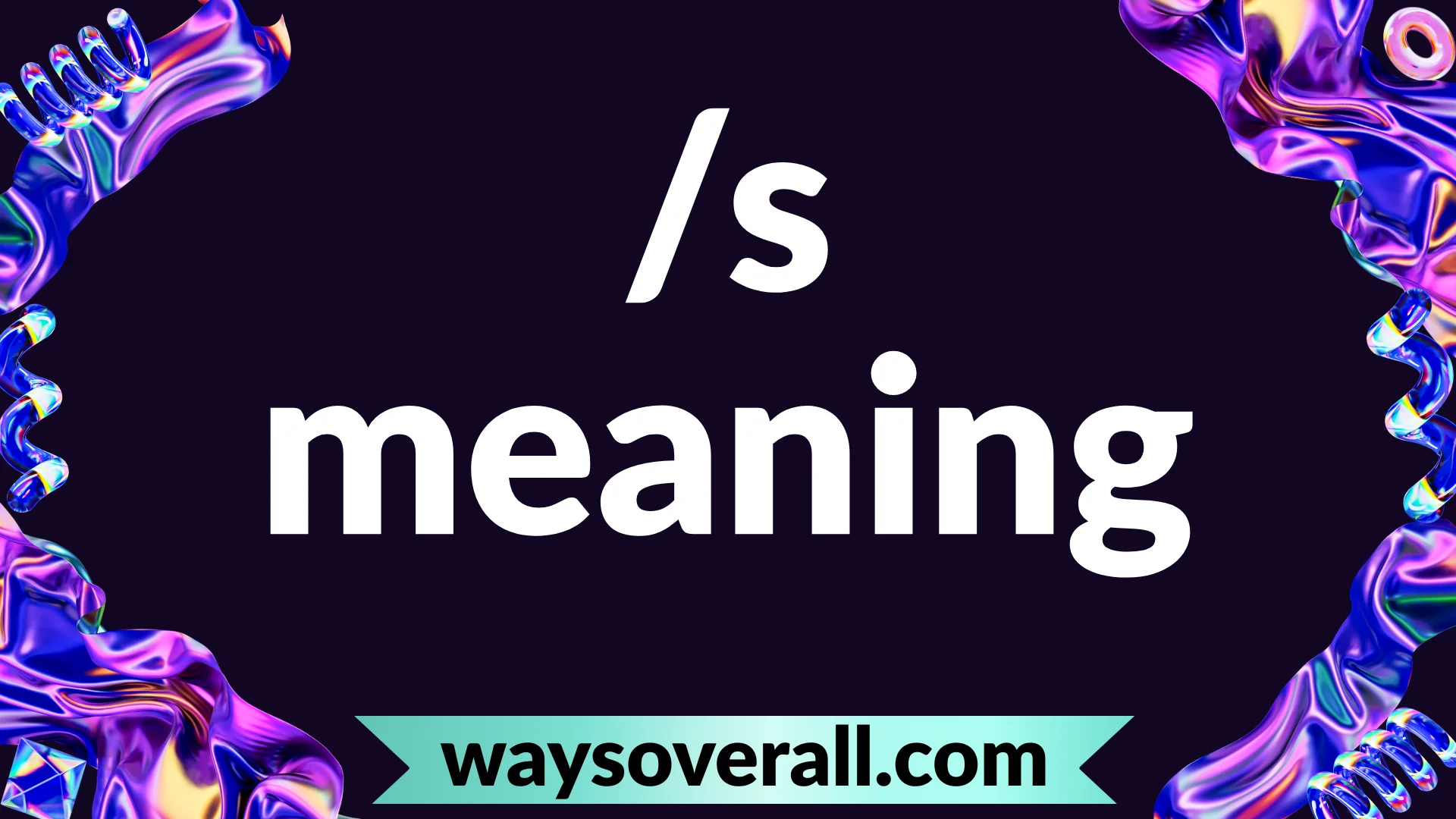
The truth is, /s is a simple but powerful way to signal sarcasm online, especially when tone is hard to read through text.
In this guide, we’ll break down exactly what /s meaning is, where it came from, how people actually use it in real conversations, and how you can respond confidently without missing the point.
/s Meaning – Quick Definition
At its core, /s means “sarcasm.”
It’s used at the end of a sentence to clarify that the message is not meant to be taken literally.
Simple Breakdown:
- /s = sarcasm indicator
- Helps avoid misunderstandings in text
- Common in online conversations
Examples:
“Yeah, waking up at 5 AM is my favorite thing ever. /s”
“Oh great, another meeting. Just what I needed. /s”
“Sure, I love when my internet stops working mid-call. /s”
Without “/s,” these statements could easily be misunderstood as genuine.
Origin & Background
The use of “/s” comes from early internet culture, particularly forums and coding environments.
In programming and markup languages, a forward slash often indicates the end of a tag. Over time, online communities adapted this idea to signal tone—especially sarcasm.
How it evolved:
- Early forums and message boards needed tone indicators
- Sarcasm was often misunderstood in plain text
- Users began adding “/s” to clarify intent
- It became popular on platforms like Reddit, Twitter, and Discord
Today, “/s” is widely recognized across the internet, especially in communities where humor and irony are common.
Real-Life Conversations (How People Actually Use It)
1. WhatsApp Chat
Person A:
I love how my boss schedules meetings at the last minute.
Person B:
Sounds amazing 😂
Person A:
Yeah, truly a dream job /s
2. Instagram DM
Person A:
You ignored my message for 2 days.
Person B:
I was busy!
Person A:
Right, because replying takes 3 hours /s
3. TikTok Comments
User 1:
This tutorial is so easy, totally didn’t confuse me at all /s
User 2:
Same 😭 I had to watch it 5 times
These examples show how /s prevents misinterpretation, especially when sarcasm might otherwise sound serious or rude.
Emotional & Psychological Meaning
Using “/s” is more than just a technical habit—it reflects how people communicate emotionally online.
Why people use it:
- To avoid conflict: Sarcasm can easily be misunderstood without tone
- To signal humor: It reassures others that the comment is playful
- To soften criticism: Makes negative remarks feel less harsh
- To stay relatable: People want to sound witty without offending others
What it says about the speaker:
- Aware of digital communication challenges
- Likely values clarity and tone
- Comfortable using humor in conversation
In many ways, “/s” is a modern solution to an old problem: how to express tone without voice or facial expressions.
Usage in Different Contexts
1. Social Media
On platforms like Twitter or Reddit, sarcasm is everywhere—but tone isn’t obvious.
Example:
“Love when apps crash right before saving my work /s”
Here, “/s” avoids confusion and prevents unnecessary arguments.
2. Friends & Relationships
Among friends, sarcasm is common—but not always clear in text.
Example:
“Wow, you’re always on time /s”
Without “/s,” this could sound like genuine praise.
3. Work or Professional Settings
This is where caution matters.
Using “/s” in professional communication can:
- Come across as passive-aggressive
- Be misunderstood by colleagues
Better approach: Avoid sarcasm entirely in formal settings.
4. Casual vs Serious Tone
- Casual chats: “/s” works perfectly
- Serious discussions: Avoid it—it may reduce clarity or professionalism
Common Misunderstandings
1. Thinking “/s” means serious
Some beginners assume it means the opposite—this leads to confusion.
2. Missing the sarcasm without it
Not everyone uses “/s,” so sarcasm can still be misunderstood.
3. Overusing it
Adding “/s” to every sarcastic line can:
- Make you sound unnatural
- Reduce the impact of humor
4. Using it in sensitive situations
Sarcasm—even with “/s”—can feel inappropriate during serious conversations.
Comparison Table
| Term | Meaning | Tone | Usage Context |
|---|---|---|---|
| /s | Sarcasm | Playful/Ironic | Online conversations |
| jk | Just kidding | Light | Friendly chats |
| lol | Laughing out loud | Casual | Everyday texting |
| seriously | Literal meaning | Serious | Clear statements |
| /gen | Genuine | Honest | Emotional clarity |
| irony | Opposite meaning | Subtle | Writing/literature |
Key Insight:
“/s” is unique because it explicitly labels sarcasm, while most other terms rely on context.
Variations / Types of Tone Indicators
Here are commonly used variations similar to “/s”:
- /j – Joke
Used when something is meant humorously. - /hj – Half-joking
Part serious, part joking. - /gen – Genuine
Indicates sincerity. - /srs – Serious
Clarifies a serious tone. - /lh – Light-hearted
Playful and not intense. - /nm – Not mad
Prevents misunderstanding of tone. - /pos – Positive
Shows good intent. - /neg – Negative
Indicates criticism. - /t – Teasing
Friendly teasing context. - /rant – Emotional expression
Signals venting or frustration.
How to Respond When Someone Uses “/s”
Casual Replies
- “Haha I figured 😄”
- “You almost got me there”
- “That sarcasm hit hard”
Funny Replies
- “Wow, so convincing 😂”
- “Oscar-worthy sarcasm”
- “I totally believed you… for a second”
Mature / Confident Replies
- “Got it, thanks for clarifying”
- “Makes sense now”
- “Appreciate the sarcasm note”
Private / Respectful Replies
- “I understand your point”
- “Thanks for explaining”
- “That clears it up”
Regional & Cultural Usage
Western Culture
- Very common in online communities
- Especially used on Reddit and Twitter
- Seen as normal and helpful
Asian Culture
- Less commonly used
- Tone often conveyed through emojis instead
- Sarcasm itself is less frequent in some cultures
Middle Eastern Culture
- Growing usage among younger users
- Often mixed with humor and memes
- Still not universally recognized
Global Internet Usage
- Increasingly popular worldwide
- Especially among Gen Z and digital-native users
- Part of a broader trend of tone indicators
FAQs
1. What does /s mean in text?
It means sarcasm, indicating the sentence should not be taken literally.
2. Is /s rude?
Not usually. It helps clarify humor, but context still matters.
3. Where is /s mostly used?
Mainly on social media platforms like Reddit, Twitter, and online forums.
4. Can I use /s in professional emails?
It’s best to avoid it. Sarcasm can be misunderstood in formal communication.
5. Is /s only for sarcasm?
Yes, it specifically signals sarcasm, not general humor.
6. Why not just use emojis?
Emojis help, but “/s” clearly labels intent—especially in complex sentences.
7. Do all people understand /s?
Not everyone, especially those unfamiliar with internet slang.
Conclusion
Understanding /s meaning is a small but important step in navigating modern digital communication.
It solves a real problem—how to express sarcasm clearly in text without tone or facial cues. Used correctly, it makes conversations smoother, funnier, and less likely to cause misunderstandings.
But like any tool, it works best when used thoughtfully. In casual chats, it adds clarity and humor. In serious situations, it’s better left aside.
The more you notice it in real conversations, the more natural it becomes. And soon, you won’t just understand it—you’ll know exactly when (and when not) to use it.
────────────────────────────────────────
Discover More Articles
WTV Meaning in Chat: What It Really Means and How to Use It Naturally
ETA Meaning in Text: What It Really Means, How to Use It, and Why People Use It So Often
STG Meaning: What It Really Means in Text, Social Media, and Real Life (Complete Guide)
OAT Meaning Slang: What It Really Means, Where It Came From, and How to Use It Naturally

As the author of this platform, I specialize in English grammar and effective writing techniques. My goal is to break down complex language rules into simple, useful guidance that readers can apply in everyday communication and professional settings.